


History
Information on UK stranded cetaceans has been routinely collected by the Natural History Museum since 1913 when the historic rights to strandings were transferred to them by the then Board of Trade. For more information, please follow the link below:
http://www.nhm.ac.uk/research-curation/projects/strandings
In 1988, an outbreak of phocine distemper virus resulted in the deaths of many thousands of seals throughout European waters. As a result, in 1990 the then UK Department of the Environment initiated the funding of a long-term monitoring programme involving the systematic post-mortem examination of UK-stranded cetaceans. A number of organisations now collaboratively record information on all cetaceans that are found stranded around UK shores and retrieve a proportion of these strandings for examination at post-mortem.
Please click here for information on the organisational structure of the CSIP and stranding numbers in the UK.
CSIP timeline
| 1913 | Natural History Museum begins systematic recording of UK stranded cetaceans |
| 1988 | PDV epizootic occurs in European waters |
| 1990 | Department of Environment initiates funding of cetacean stranding investigation in England and Wales |
| 1992 | Similar strandings investigation project initiated in Scotland |
| 2000 | Separate projects amalgamated into single UK strandings investigation programme |
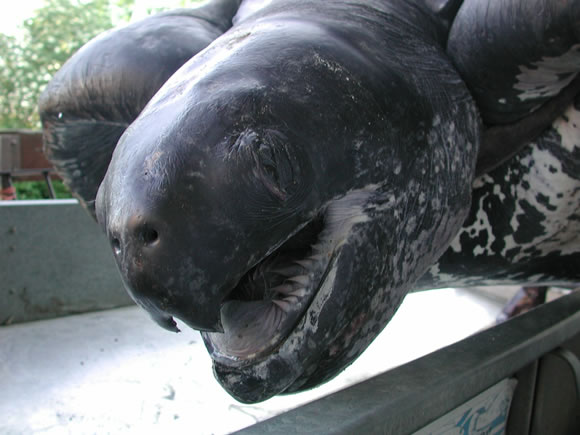
| 2001 | Investigation of UK stranded marine turtles is incorporated into CSIP remit |
| 2002 | Second major epizootic of PDV in European waters. CSIP lead the UK investigation |
| 2007 | Current period of funding begins. Basking shark strandings investigation incorporated |